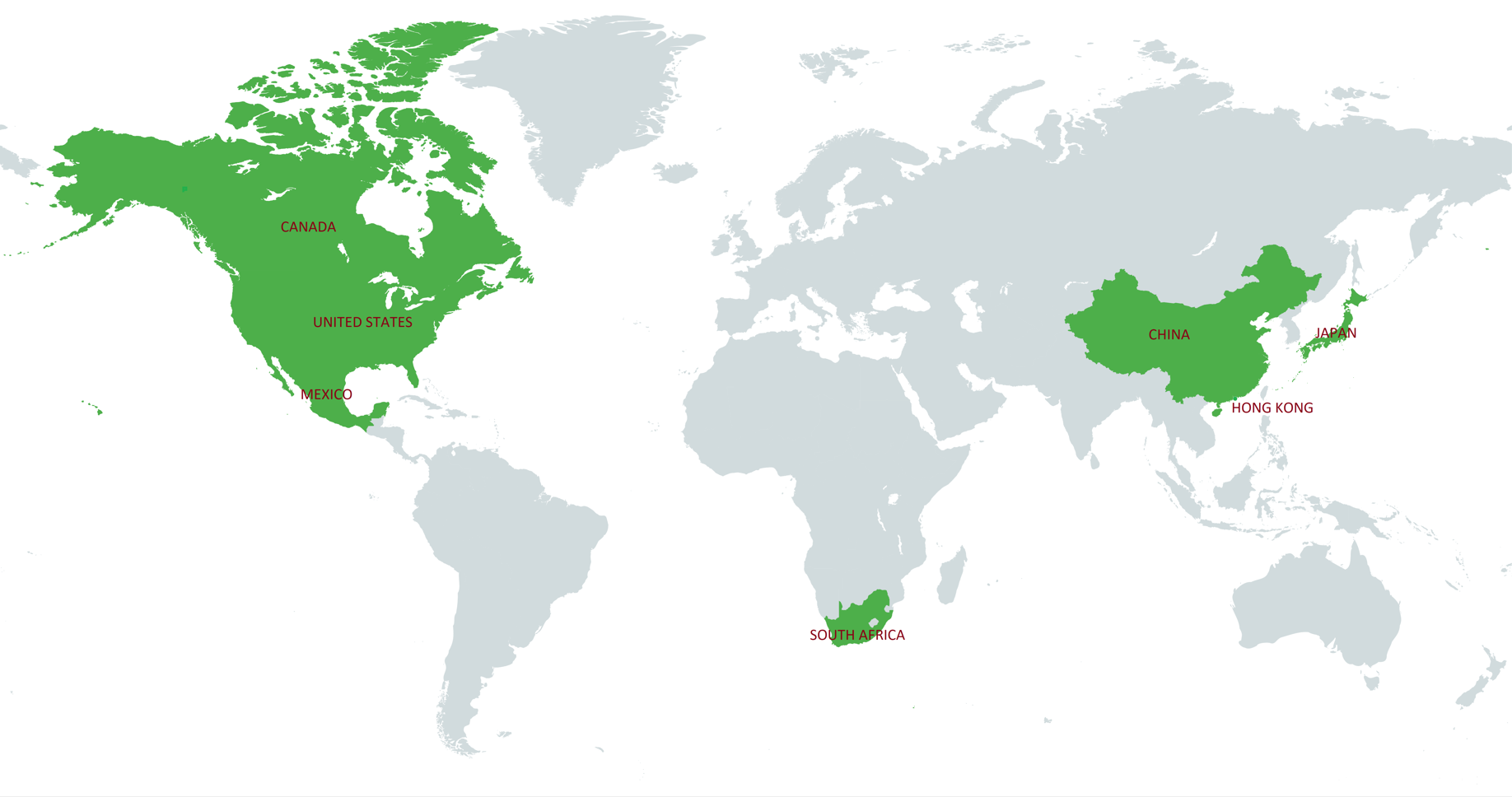
Signed in April 2008, the “Canberra Accord on Architectural Education: Recognition of Substantial Equivalence between Accreditation/Validation Systems in Architectural Education” is a document by accreditation/validation agencies in architectural education. The Canberra Accord is intended to facilitate the portability of educational credentials between the countries whose accreditation/validation agencies signed the Accord. It does not address matters related to professional registration or licensure. This site is designed to provide information to three groups:
- Individuals who will have completed their professional architectural education beginning January 1, 2010 in a program accredited/validated by one of the signatory systems.
- Leaders and staff of signatory agencies or organizations.
- Leaders and staff of regulatory agencies responsible for professional licensure or registration in architecture.
The Canberra Accord recognizes the substantial equivalency of accreditation/validation systems in architectural education of its Signatories
“Substantial equivalency identifies a program/me as comparable in educational outcomes in all significant aspects, and indicates that it provides an educational experience meeting acceptable standards, even though such program/me may differ in format or method of delivery. Substantial equivalency is not accreditation.”
In May 2006, the National Architectural Accrediting Board, the National Council of Architectural Registration Boards, and The American Institute of Architects convened the first International Invitational Accreditation/Validation Roundtable in Washington, DC. Leadership from the architectural accrediting agencies of the U.S., Australia, Canada, China, Mexico, Korea, the United Kingdom, and the Commonwealth Association of Architects, as well as leaders from the International Union of Architects (UIA) attended.
The purpose of the roundtable was to determine whether these agencies had sufficient interest and equivalency between their systems of accreditation/validation to enter into an accord on accreditation/validation in architectural education, similar to that already in place for engineering. At the end of the meeting, the participants agreed to undertake a comparative analysis of their systems of accreditation based on a review of the documents underpinning each agency’s system (i.e., conditions/criteria and procedures for accreditation). The participants from the first roundtable, reconvened in Ottawa, Ontario, Canada in May 2007.
The primary purpose of the second International Invitational Accreditation/Validation Roundtable was to review the results of the comparative analyses of each agency. The participants concluded that the significant similarities between the participants’ systems meant they could be accepted as substantially equivalent to each other.
The participants agreed that graduates from institutions accredited or validated by one system would still be subject to additional requirements imposed by local law. Therefore, it was possible to work toward developing an agreement sooner than expected. In mid-August, the first draft of the “Canberra Accord on Architectural Education: Recognition of Substantial Equivalence between Accreditation/Validation Systems in Architectural Education” was sent to the participants from the May 2007 meeting for review and comments. A second draft followed in late September.
A third International Invitational Accreditation/Validation Roundtable was convened in Canberra, Australia in April 2008, with the primary purpose to ratify the accord. The “Canberra Accord on Architectural Education: Recognition of Substantial Equivalence between Accreditation/Validation Systems in Architectural Education” was signed on April 9, 2008 in Canberra, Australia.
.